Universidad de Antioquia · Aesthetic Dentistry Certificate · Health Auditing Specialist (CES)
17+ years of clinical and cosmetic dentistry experience
Colombian Dental License TP 70196663
A brighter smile can make a real difference in how you feel about your appearance, but choosing teeth whitening in Medellín should never be reduced to picking the fastest or most popular option. At Be Dharma Dental, in Medellín, Colombia, we understand that most patients are looking for a safer, more refined way to improve the color of their teeth while keeping their smile natural. That is why teeth whitening and bleaching treatments should always begin with a professional evaluation, especially when the goal is to achieve noticeable results without overlooking enamel health, sensitivity, or the real cause of discoloration.
However, not every smile should be treated in the same way. Some patients may respond well to professional whitening performed under dental supervision, while others may need a more personalized approach depending on the type of stains, previous dental work, or overall oral health. At our clinic in Torre Médica Oviedo, we help patients understand the difference between in-office treatment and at-home options, so they can make informed decisions with confidence. Before any whitening plan begins, we believe the most important step is understanding what your smile truly needs.
What is teeth whitening and how does bleaching work?
When patients ask us about improving the color of their smile, they are often talking about the same goal, even if they use different words. In everyday English, tooth whitening usually sounds more natural and patient-friendly, while teeth bleaching tends to sound a bit more technical. In practice, both terms are commonly used to describe treatments designed to lighten natural teeth and reduce visible discoloration. These treatments may be performed in the office, prescribed by a dentist for home use, or purchased over the counter, but the right option depends on much more than the shade a patient hopes to achieve.
Teeth whitening vs. teeth bleaching: is there a real difference?
In most patient conversations, the difference is more about language than about two separate procedures. We usually use “whitening” when speaking in a broader, more familiar way, while “bleaching” is often used in a more clinical context, especially when peroxide-based agents are involved. That said, what matters most is not the label itself, but whether the treatment is appropriate for the patient’s teeth, oral health, and cosmetic goals. A smile that looks yellow or stained is not always treated the same way, and this is exactly why a one-size-fits-all approach can be misleading.
What causes teeth to look yellow, dull, or stained?
There are several reasons teeth may lose their brightness over time. Some stains build up on the outer surface of the enamel and are commonly linked to coffee, tea, red wine, tobacco, and daily habits that gradually affect the appearance of the smile. In other cases, the color change comes from inside the tooth structure, which may happen with aging, trauma, certain medications, or deeper internal discoloration. As enamel naturally becomes thinner over time, the underlying dentin can also become more noticeable, which is one reason teeth may appear more yellow with age.
Surface stains vs. deeper discoloration
This distinction matters because not all discoloration responds in the same way. Surface stains are often more responsive to whitening, especially when they are related to foods, drinks, or smoking. Deeper discoloration, however, may require a more careful assessment because it does not always improve to the same degree with traditional whitening alone. In some cases, the issue is not simply staining, but the natural color of the tooth, the condition of the enamel, or a history of previous dental treatment.
Why dental evaluation matters before whitening
Before recommending any of our teeth whitening and bleaching treatments, we always consider the type of discoloration, the condition of the enamel, the presence of sensitivity, and whether the patient has restorations such as crowns, composite fillings, or veneers. This is essential because only natural teeth respond to whitening agents. Existing restorations do not lighten in the same way, which means a patient may end up with uneven color if treatment is started without proper planning. In other words, whitening should never begin with the product alone; it should begin with diagnosis. That is how we decide whether professional whitening is the best option, whether a dentist-supervised home protocol makes sense, or whether a different cosmetic approach would be more appropriate.
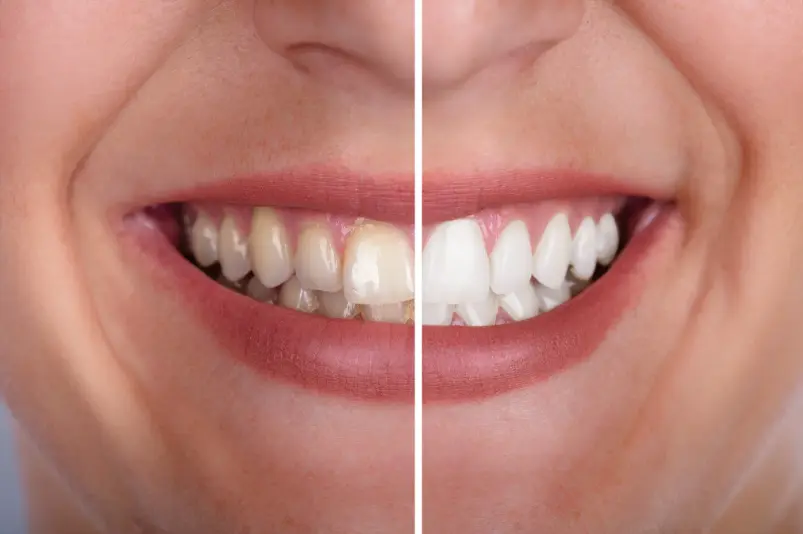
Professional treatment: why in-office care offers more control
When patients compare whitening options, what they are usually asking is not only which treatment works, but which one gives them more predictability, more safety, and a result that feels worth it. That is exactly why teeth whitening at dentist level tends to offer more control than unsupervised alternatives. According to the NHS, the safest way to whiten teeth is either with a dentist-prescribed kit or with treatment performed at a dental office, because the materials used are strong and should be handled by dental professionals who know how to protect both teeth and gums. The same guidance also explains that in-office laser whitening is generally quicker and more effective than gel alone.
At a glance
- In-office whitening: faster, more controlled, and performed under direct clinical supervision.
- Dentist-supervised take-home trays: more gradual, but still customized and professionally guided.
- Both options: should begin with an evaluation of the teeth, gums, restorations, and whitening goals.
In-office whitening vs. dentist-supervised take-home trays
Professional teeth whitening and bleaching treatments can be delivered in two main ways. The first is an in-office procedure, where the whitening gel is applied under direct supervision and the protocol is adjusted in real time based on the patient’s comfort, tooth shade, and response. The second is a dentist-supervised take-home system, which uses custom trays made to fit the patient closely, so the gel stays more controlled and contact with the gums is minimized. The ADA explains that these custom trays are designed specifically for comfort and better tissue protection, while the NHS notes that patients are usually shown exactly how to wear them and how to protect their gums during treatment.
The main difference is not that one is “professional” and the other is not. Both can be professional. What changes are the pace, the setting, and the level of immediate chairside control. In-office teeth bleaching is usually chosen when the goal is a faster visible improvement, while take-home trays may be a better fit for patients who prefer a more gradual process over a few weeks. In either case, the treatment should be tailored to the patient rather than chosen only for convenience.
When faster results may be possible
One of the clearest advantages of professional whitening is that faster results may be possible in the office than with over-the-counter products or slower home-based methods. The NHS states that laser whitening at dental surgery is quicker and more effective, and ADA-reviewed information also notes that over-the-counter systems often take longer to reach a level of whitening comparable to in-office treatment or dentist-supervised trays.
Still, faster does not mean carelessness. A brighter result should always be balanced with enamel condition, previous restorations, baseline shade, and the patient’s tolerance to sensitivity. In other words, speed can be an advantage, but only when it is guided by sound clinical judgment.
Why gum protection and clinical supervision matter
This is where professional care makes a real difference. During in-office whitening, the gums are protected with a soft shield or protective material before the gel is applied. The NHS explains that this barrier is used specifically to protect gingiva, and the ADA also notes that gingival irritation is commonly related to poor tray fit or improper application of protective barriers or gel. Clinical supervision helps reduce those risks and allows the team to respond quickly if discomfort appears during treatment.
Sensitivity also deserves attention. ADA-reviewed information notes that temporary tooth sensitivity can happen with whitening, particularly in the early stages, while the NHS lists short-term sensitivity and gum irritation among the possible side effects of professional treatment. That is precisely why we do not see whitening as a product-only decision. We see it as a treatment that benefits from diagnosis, supervision, follow-up, and a plan built around the patient’s real oral condition.
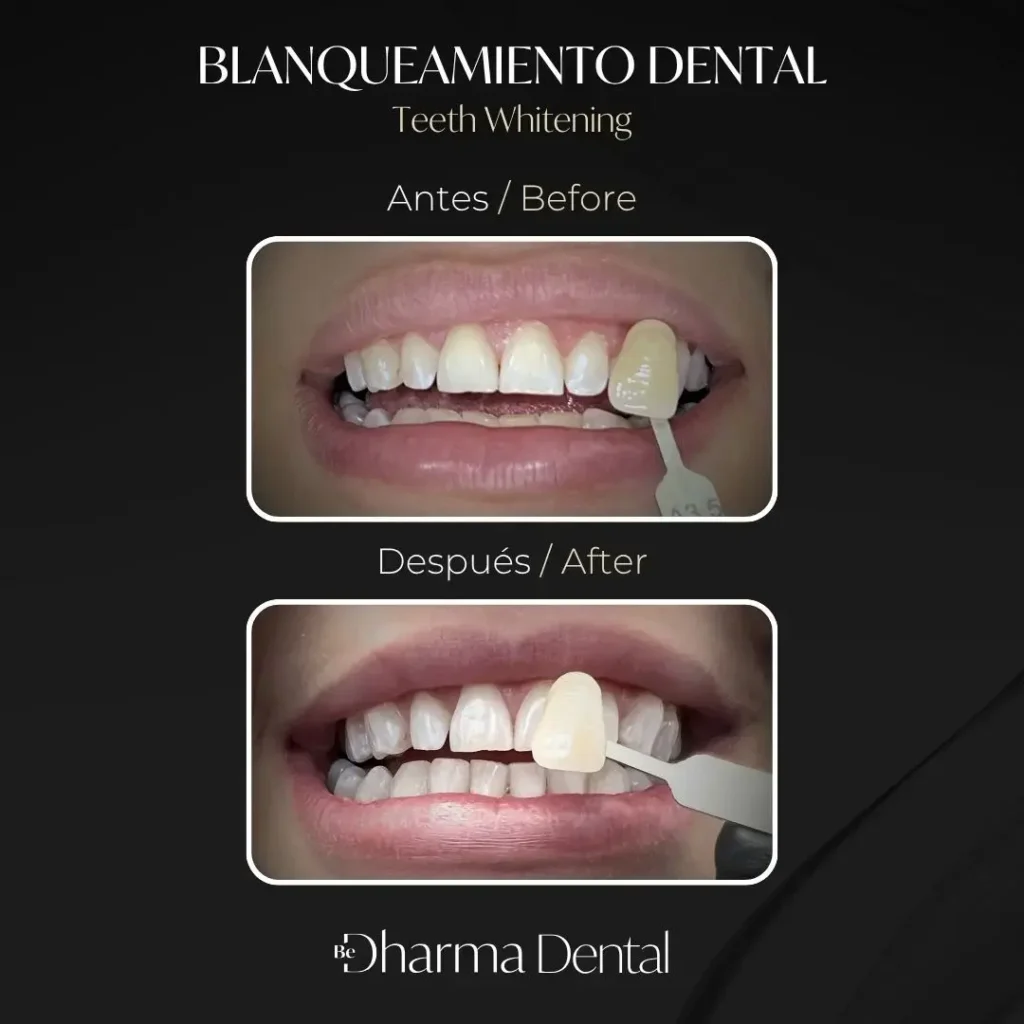
At-home methods: how do they compare to professional care?
Many patients start by looking into teeth whitening at home because it feels simple, accessible, and easy to fit into a routine. In many cases, that first step makes sense. Over-the-counter whitening products such as strips and paint-on gels can help lighten some surface staining, especially when they are used consistently over time. However, authoritative dental sources also make an important distinction: these options tend to be less effective, slower, and less personalized than professional whitening, which uses stronger formulations and clinical supervision.
Teeth whitening strips
Whitening strips are thin, flexible strips coated with a bleaching agent that is placed directly onto the teeth for a set amount of time. They are one of the most common at-home whitening formats, and they can be useful for patients with mild external staining who are willing to follow the instructions carefully over days or weeks. The ADA notes that home-use whiteners include strips, while expert ADA commentary adds that strips may work with regular use, although they are typically less effective than in-office whitening.
Teeth whitening pen
A Teeth Whitening pen is another at-home option, usually designed to deliver a whitening gel that is brushed or painted onto the surface of the teeth. In practice, it is often chosen by patients who want something portable and easy to apply. Still, convenience should not be confused with precision. ADA News has specifically warned that overuse of over-the-counter whitening products such as strips, pens, and gel-filled trays may affect oral health, which is one reason professional guidance continues to matter even when the method seems simple.
Pros, limitations, and what results people usually expect
At-home whitening can be appealing for a few clear reasons:
- It is easy to access.
- It can fit around a patient’s schedule.
- It may help with mild surface discoloration caused by coffee, tea, or similar habits.
- It often feels like a lower-commitment starting point.
At the same time, the limitations are just as important:
- Results usually take longer to appear.
- The approach is less personalized.
- Gum irritation or sensitivity can happen if products are overused or not applied correctly.
- The outcome may be disappointing when discoloration is deeper or more complex.
In other words, at-home methods can help in selected cases, but they usually require consistency and realistic expectations. They are not necessarily wrong; they are simply more limited.
When at home whitening is not enough
This is where many patients become frustrated. If the discoloration is not just superficial, a strip or pen may not deliver the result they expected. Cleveland Clinic advises that brown or gray discoloration may point to issues a bleaching kit will not fix, and it also stresses that gum disease or cavities should be addressed before starting any whitening treatment. The same guidance warns against replacing professional advice with improvised home remedies such as vinegar, charcoal, or household hydrogen peroxide.
At Be Dharma Dental, we see at-home whitening as one possible route, not as a substitute for diagnosis. When a patient wants a safer, more controlled change in smile color, the right question is not only whether whitening is available at home, but whether the smile has been properly evaluated first.
Cost in Medellín: what affects the final price?
When patients search for teeth whitening Medellín cost or compare teeth whitening price online, they are usually hoping to find one clear number. However, whitening is not the kind of treatment that should be quoted responsibly without first understanding the case. At Be Dharma Dental, we do not believe in offering a one-size-fits-all fee for treatment that depends on the patient’s current tooth shade, oral condition, treatment goals, and the type of whitening protocol that makes the most sense clinically.
Why teeth whitening prices vary from one patient to another
A professional whitening plan is influenced by several factors, not just by the idea of making teeth look whiter. That is why two patients asking for the same treatment may not always need the same approach.
Main factors that may influence planning and cost:
- The whitening technique used
- The number of visits or treatment phases involved
- The starting shade of the teeth
- The patient’s goals and expected level of change
- Whether cleaning or other dental care is recommended first
This matters because whitening should be planned, not improvised. NHS guidance explains that standard whitening may involve multiple visits plus home sessions with a custom mouthguard, while professional pathways can also include in-office options or dentist-prescribed kits. That already shows why treatment planning is not identical in every case.
Type of whitening technique used
One major factor is the technique itself. In-office whitening, laser-assisted protocols, and dentist-supervised take-home trays do not all involve the same process, materials, or level of chairside supervision. Official dental sources distinguish clearly between professional in-office whitening and custom tray-based home whitening prescribed by the dentist, which means technique selection is part of the clinical plan, not just a pricing detail.
Number of sessions needed
The number of sessions can also change the plan. Some patients may be candidates for a more direct in-office protocol, while others may need a staged approach. NHS guidance notes that standard whitening can involve two to three visits plus home wear over several weeks, which illustrates why treatment time and follow-up are not always identical from one case to another.
Starting tooth shade and treatment goals
A patient who wants a subtle refresh is not always looking for the same result as someone with more noticeable discoloration. The starting shade matters, and so does the type of discoloration present. Cleveland Clinic notes that brown or gray discoloration may not respond the same way as more superficial staining, which is why goals need to be realistic and clinically grounded from the start.
Whether cleaning or previous dental care is needed first
Sometimes whitening is not the first step. Cleveland Clinic advises that dental concerns such as gum disease or cavities should be treated before bleaching, and it also points out that regular dental cleanings can help manage plaque and surface stains. In practical terms, this means some patients may benefit from preparing the smile first before moving into whitening.
Why choosing only by price can be a mistake
A lower price may look attractive at first, but whitening should not be chosen the way someone chooses a generic cosmetic product. The real value lies in knowing whether the treatment fits the smile, whether the gums and enamel are being protected, and whether the expected result is realistic. NHS guidance emphasizes that the safest way to whiten teeth is through a dentist-prescribed kit or treatment performed at a dental practice, because the chemicals used are strong and should be handled by trained professionals.
That is why, at Be Dharma Dental, we believe the conversation should go beyond cost alone. The goal is not simply whiter teeth. The goal is to achieve a brighter smile with professional judgment, safety, and control.
Looking for a trusted dental clinic in Medellín?
If you are searching for teeth whitening near me, you are probably not just looking for the closest clinic. Most patients are really looking for a place where whitening is approached with safety, good judgment, and results that look natural rather than overdone. In a city like Medellín, Colombia, that decision should go beyond convenience alone.
At Be Dharma Dental, we believe location matters, but clinical standards matter more. That is why patients looking for a Teeth Whitening dentist near me should pay attention not only to where a clinic is located, but also to whether the team performs a proper evaluation, explains the available whitening options clearly, and offers follow-up based on the patient’s needs. For local patients and international visitors alike, choosing a clinic in Torre Médica Oviedo can add comfort and accessibility, but the real value lies in receiving care that is planned with professional criteria.
How to choose a Teeth Whitening dentist near me
Choosing a whitening provider should feel more like choosing a clinical partner than choosing a beauty service. A good clinic should assess whether whitening is appropriate, explain what type of discoloration is present, and be transparent about what kind of result is realistic. That matters because not every smile responds in the same way, and not every patient is a good candidate for the same whitening protocol.
What to review before choosing a clinic
- Whether a clinical evaluation is done before whitening
- Whether the dentist explains in-office and take-home options
- Whether the clinic checks gums, enamel, and existing restorations
- Whether follow-up is part of the process
- Whether the location is practical for your schedule or travel plans
Clinical evaluation before whitening
This is one of the most important filters. A proper evaluation helps determine whether the discoloration is superficial or deeper, whether the teeth are healthy enough for whitening, and whether previous dental work may affect the result. That is exactly why whitening should never start with the product alone. It should start with diagnosis.
Experience, technology, and follow-up
Experience matters because whitening is not just about making teeth lighter. It is about doing it in a controlled way. A qualified dental team should know how to protect the gums, manage sensitivity, and adjust the protocol when needed. That clinical oversight becomes even more important when patients want a more visible change in a limited amount of time.
Convenience of location in Medellín
Convenience should not be the only reason to choose a clinic, but it does matter. For patients in Medellín, Colombia, or for those traveling for dental care, being seen in a well-located medical setting can make the process much easier. At Be Dharma Dental, our location in Torre Médica Oviedo supports both local access and a more comfortable experience for international patients who value privacy, organization, and a premium clinical environment.
Who is a good candidate for this treatment?
Not every patient who wants a whiter smile needs the same treatment, and not every discoloration responds in the same way. In general, tooth whitening tends to work best on natural teeth that have become more yellow over time or have developed staining from food, drinks, or tobacco.
That said, being interested in teeth bleaching does not automatically make someone the right candidate for it. A smile may look darker for many reasons, and in some cases the better solution is not stronger whitening, but a different cosmetic or restorative approach. This is why teeth whitening at dentist level begins with evaluation and planning, not assumptions.
When yellow teeth may respond well to whitening
Patients with yellowing related to age, dietary staining, or surface discoloration are often among the best candidates for whitening. These cases usually involve natural teeth that can respond to professional whitening agents in a more predictable way. When the enamel is healthy, the gums are stable, and expectations are realistic, whitening may be an excellent option to refresh the smile without moving into more invasive cosmetic treatment.
Signs a patient may be a good candidate
- Natural teeth with yellowing or visible staining
- Discoloration related to coffee, tea, red wine, or smoking
- Healthy gums and no untreated cavities
- Realistic goals about how much whitening is possible
Cases that may need a different cosmetic solution
Sometimes whitening is not the best answer, even when the patient wants a brighter smile. If discoloration is linked to previous dental work, internal damage, or a type of staining that does not respond well to bleaching, the treatment plan may need to change. In those situations, the most appropriate option may involve a different cosmetic strategy rather than simply repeating whitening sessions.
Fillings, veneers, and crowns
This point is essential. Whitening agents work on natural teeth, but they do not lighten restorations in the same way. In practical terms, this means a patient with visible restorations may need a more comprehensive cosmetic plan if they want a uniform result.
Gray or brown discoloration
Gray or brown discoloration deserves more caution. In cases like these, whitening may not be the most effective path, or it may need to be combined with another solution after a proper diagnosis. This is one of the clearest examples of why a personalized evaluation matters before choosing any whitening approach.
Sensitivity, gum issues, or untreated dental problems
A patient may also need to delay whitening if there is significant sensitivity, gum disease, or untreated decay. That reinforces an important clinical principle: the goal is not just to make teeth look whiter, but to do so under the right conditions, with the smile already healthy enough for treatment.
At Be Dharma Dental, this is exactly why we begin with diagnosis and personalized planning. The best candidate for whitening is not simply the person who wants a brighter smile, but the patient whose teeth, oral health, and cosmetic goals make whitening the right treatment at the right time.
Why choose Be Dharma Dental in Medellín, Colombia?
At Be Dharma Dental, we believe that choosing teeth whitening in Medellín should feel less like choosing a cosmetic service and more like trusting a team that knows how to care for your smile with judgment, precision, and intention. As the premium dental unit of Clínica Be Dharma, we approach every case from a medical-aesthetic perspective, which means we do not treat whitening as a one-size-fits-all procedure. We begin with evaluation, we plan carefully, and we recommend what truly suits the patient’s smile, oral health, and aesthetic goals. For patients looking for teeth whitening at dentist level, that difference matters, because better results begin with better criteria.
Our location in Torre Médica Oviedo, in Medellín, Colombia, also allows us to offer a high-level clinical environment designed for comfort, privacy, and personalized care. We welcome both local and international patients who want more than a quick cosmetic change and are looking instead for professional experience that feels safe, refined, and genuinely personal. At Dharma Dental, our goal is not to create white or artificial smiles, but to help each patient achieve a brighter result that still looks natural, elegant, and aligned with who they are.
Professional vs. at-home teeth whitening
| Factor | Professional (in-office) | At-home (OTC products) |
|---|---|---|
| Supervision | Dentist-supervised, personalized | Self-applied, generic |
| Concentration | Higher (clinical-grade) | Lower (consumer-grade) |
| Gum protection | Barrier applied by dentist | Limited or none |
| Time to results | Often visible after 1 session | Gradual, over days or weeks |
| Custom fit | Trays made for each patient | One-size strips or pens |
| Diagnosis included | Yes — evaluates cause of staining | No — treats symptoms only |
Frequently asked questions
Is it good to bleach your teeth?
It can be a good option when it is done for the right reason and under the right conditions. Professional whitening can help improve the appearance of natural teeth affected by surface or internal staining, but it should begin with a dental evaluation to confirm that the teeth and gums are healthy enough for treatment. In other words, teeth bleaching can be beneficial, but it should be planned rather than done casually.
How long does teeth bleaching last?
Teeth bleaching is not permanent. In many cases, the result can last for a long time, but that depends on the patient’s habits and how well the smile is maintained afterward. Regular consumption of coffee, tea, red wine, or tobacco can make the teeth become stained again more quickly, so longevity varies from one person to another.
How much does it cost to bleach my teeth?
There is no single responsible answer for every patient. The final cost usually depends on the type of whitening protocol being used, whether treatment is performed in the office or with dentist-supervised trays at home, how many visits are needed, and whether other dental care should be done first. That is why we prefer to assess the smile first and then recommend the most appropriate plan rather than treating whitening as if it were identical in every case.
Can yellow teeth be white again?
In many cases, yes. Teeth that have yellowed with age or developed staining from food, drinks, or smoking often respond well to whitening, especially when the teeth are natural and healthy. However, the degree of improvement can vary, and not every type of discoloration responds in the same way.
Is teeth whitening better at the dentist or at home?
That depends on the case, but professional whitening generally offers more control, stronger clinical guidance, and a more personalized approach. At-home options may help in some situations, especially with mild surface stains, but treatment performed or supervised by a dentist is usually the safer and more predictable way to whiten teeth.
Do whitening strips work as well as professional teeth whitening?
Whitening strips can help in some cases, especially when the staining is mild and superficial. Even so, they are usually less personalized and may take longer to show noticeable results. Professional whitening allows the dentist to evaluate the cause of discoloration, protect the gums properly, and adjust the treatment based on the patient’s response, which gives the process a higher level of control.
Can crowns, veneers, or fillings be whitened?
No, not in the same way natural teeth can. Whitening agents work on natural tooth structure, but existing restorations such as crowns, veneers, bonding, and composite fillings do not change color in the same way. This is why some patients may need a broader cosmetic plan if they want a more even overall result.
How many sessions of teeth whitening at dentist do I need?
There is no universal number that applies to everyone. Some patients may be good candidates for a more immediate in-office approach, while others may benefit from a staged plan or dentist-supervised take-home trays over a few weeks. The right number of sessions depends on the starting shade, the type of discoloration, the whitening technique selected, and the result the patient is hoping to achieve.
Is teeth whitening safe for sensitive teeth?
It can be, but it needs to be approached carefully. Sensitivity is one of the most common temporary side effects of whitening, and not everyone should begin treatment right away. Patients with cavities, active gum problems, or untreated dental issues may need care first. When sensitivity is already present, the whitening plan may need to be adjusted rather than ruled out completely.
Related reading
Dental Tourism in Colombia: What International Patients Should Know Before Booking — A practical guide from our clinical team for international patients evaluating dental care in Medellín. Costs, safety, timelines, and what to verify before booking.
Last medical review: August 2026